

You’ve all heard me say it before …. how frustrating it is when people hear the word autistic and immediately start judging what that must mean. It’s a spectrum, it’s different for everyone, and for me it just means my brain works in a slightly different way. Yes, there are bits that can be trickier in a world built for neurotypical brains, but there are also so many upsides that I honestly wouldn’t trade.
My brain is much more mathematical and puzzle-orientated, always looking for the patterns, the logic, the next connection to make sense of the world. That doesn’t mean I don’t feel things …. quite the opposite. I’m probably too tuned in to moods and undercurrents sometimes, which is exactly where the overthinking comes in.
This week something small happened that really got me thinking about catastrophising …. how it can send me into a spin socially, but also how that same mental wiring is what makes me good at my job.
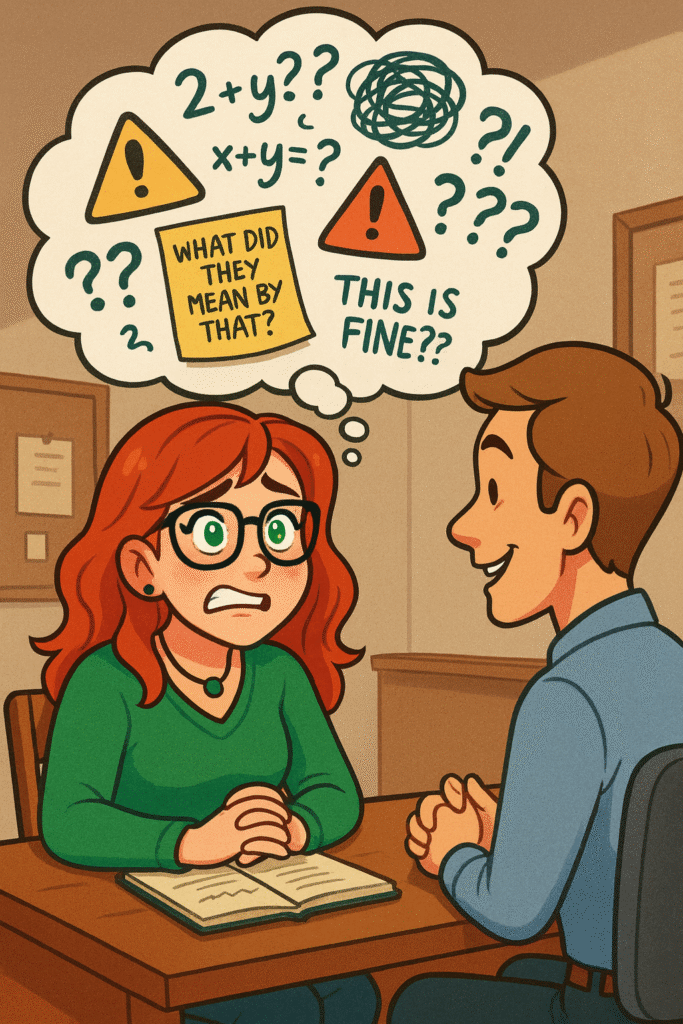
Catastrophe Mode: Activated
Catastrophising, for me, isn’t just worrying. It’s when my brain takes a completely normal situation and runs a full disaster simulation in seconds. I used to do it constantly when I was in a difficult environment and always on high alert, but now that I’m in a better, calmer place, it hardly ever happens. The problem is that because it’s so rare, when it does hit, it really hits. It catches me off guard, and my reaction feels bigger because I’m no longer expecting it.
It usually shows up in three ways.
The first is the live version – in-conversation catastrophising.
Someone says something unexpected, and suddenly my brain’s juggling everything at once … their words, tone, facial expression, body language, and what it all might mean. The mental traffic jam that follows is spectacular. Before I can form a sensible response, my system has already decided that this is going to end badly or that I’ve caused a problem. Outwardly, I probably just look quiet or distracted, but inside it’s pure chaos… alarms, flowcharts, spreadsheets, the lot.
The second is pre-catastrophising.
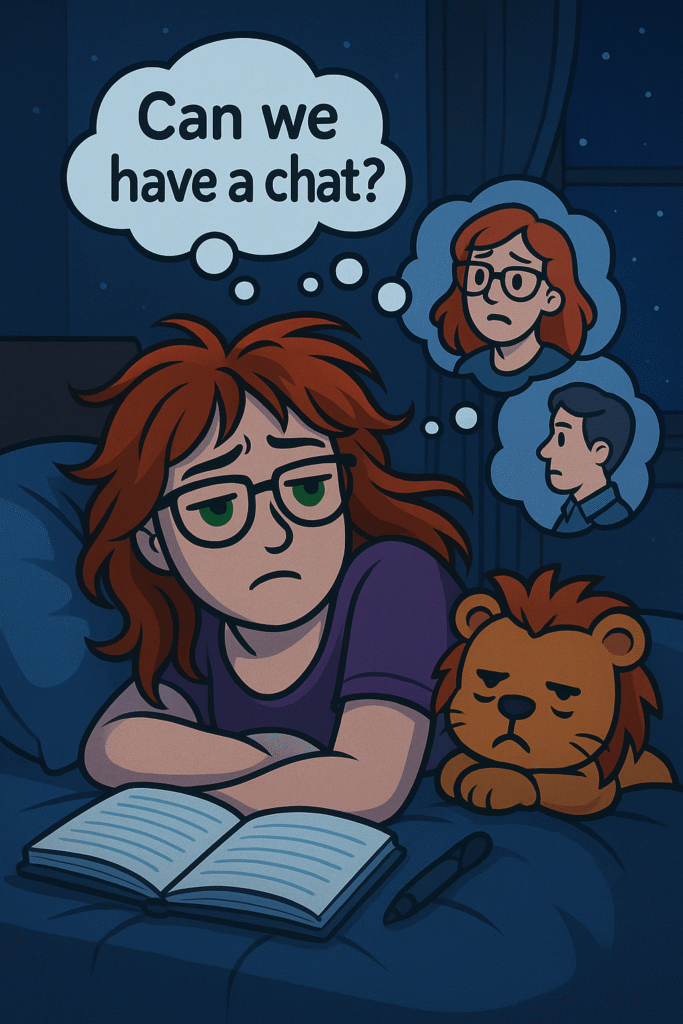
That’s when someone says, “can we have a chat?” and my brain immediately fills in the blanks. I start preparing for bad news before I’ve even heard the topic. I can imagine twelve possible disasters before breakfast.
And then there’s post-catastrophising.
That’s the one that happens after a conversation where I froze or felt unsure. I replay it endlessly, scanning for clues …. did they mean something different, did I misread the tone, do they think I was rude? It’s exhausting, and it can take days to stop the mental re-runs.
None of it’s deliberate. It’s just how my brain learned to process risk. It’s the same pattern-spotting instinct that makes me good at analysing evidence, only in social life there’s no clear data to test against. Once the alarm starts, logic doesn’t get much of a say. Still… understanding it helps. Knowing the difference between live, pre, and post-catastrophising means I can spot when it’s happening and step back from it a bit …. and that, for me, feels like real progress.
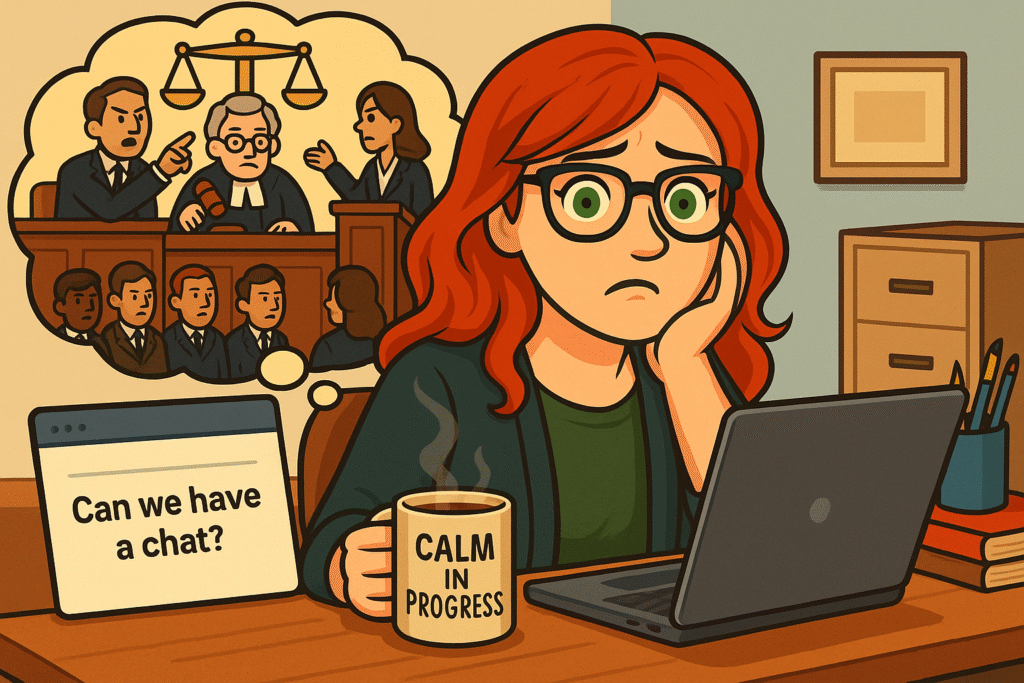
A Case Study in Overthinking ….
So here’s a recent one. Last week I was having a really lovely day … getting through work, good conversations, feeling relaxed. Everything was calm. Then, completely out of the blue, a topic came up that I really wanted to talk about, but I just hadn’t expected it to ever come up (the topic is so out of my league). The switch from steady to startled was instant.
Part of my brain immediately went into panic mode, while the other part tried to keep things logical. Logic was whispering, “this is fine, this could even be positive,” but the louder voice was already shouting, “something’s wrong, you’re about to get bad news, you’ve done something wrong.” It was like two versions of me were running in parallel, and the panicked one won.
I froze … My brain was going so fast that I couldn’t keep up!! I stared at my notebook, half-listening, half-bracing for whatever terrible thing I’d decided must be coming. I said very little and hoped they’d just get it over with. In reality, I think I just made them uncomfortable. I don’t think they understood what was happening.
Part of what makes this tricky for me is how my autistic brain works. I sometimes miss the big, obvious social cues …. the ones that neurotypical people seem to read automatically … but I’m (regularly told I’m) very tuned in to the under-vibe, the emotional energy that sits underneath what people say. The problem is, a lot of neurotypical people are really good at masking or hiding that energy, which means I can pick up on a feeling that might not actually be what their intending me to know (e.g. nervous). Then I don’t know whether to trust what I’m sensing or whether I’ve completely misread it … and that confusion alone can be enough to set the panic off.
They eventually moved the conversation on, and within a few minutes everything felt normal again, but my head didn’t stop. I’ve spent days since then replaying it, wondering what they thought. What if they misread my silence as disinterest or irritation? What if they think I didn’t want to have that conversation, when really I just didn’t know how to have it with zero warning? What if they’re annoyed with me now, or think I’m awkward, or … and this one keeps popping up … what if that was a missed opportunity for something really good?
That’s the tricky part of catastrophising. The moment itself might pass quickly, but the echo can hang around for days … and because I care … about people, about connection, about not getting it wrong … the overthinking doesn’t come from apathy, it comes from wanting things to be okay.
…. but in Forensics, this type of thinking can be useful …
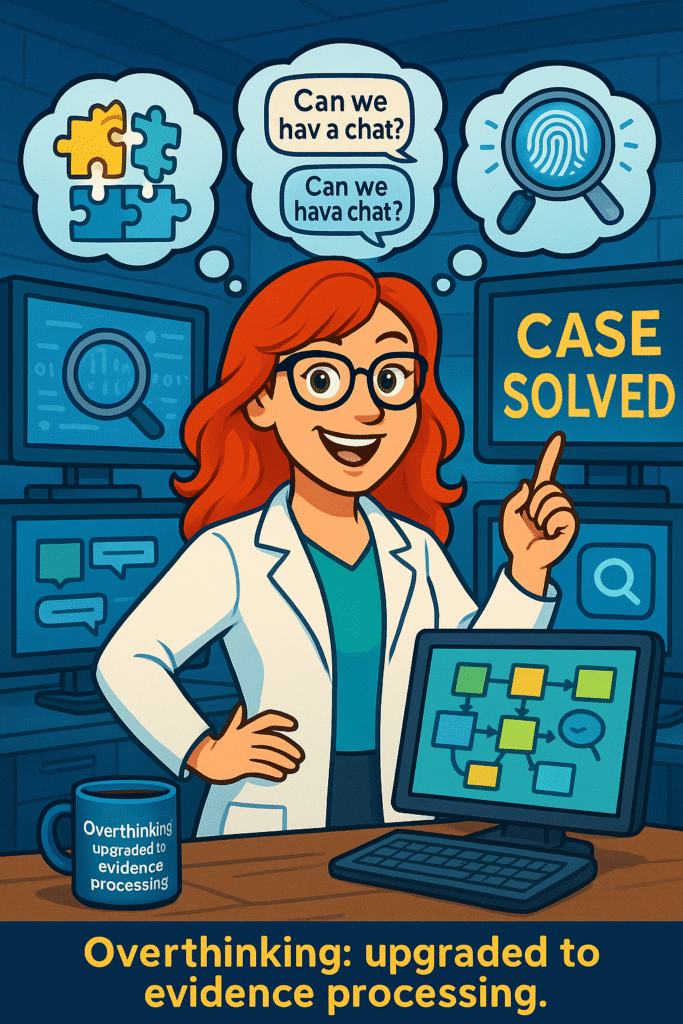
This is where the story turns a bit, because the same thought patterns that make me freeze in conversation are also what make me very good at my job. My brain never really switches off… it’s constantly scanning, comparing, looking for patterns and exceptions. What might look like overthinking in a social setting is actually high-speed data analysis when I’m working on a case.
Digital forensics is basically one long puzzle. You’re piecing together fragments of data, logs, timestamps, messages, and random digital breadcrumbs to tell a story. You’re looking for the things that don’t quite fit… the odd pattern, the missing link, the clue that hides in plain sight. That’s exactly how my brain works! It runs through possibilities, builds scenarios, tests theories, and keeps circling back until something makes sense.
Where most people might glance at a report and move on, my brain wants to know why that one log looks slightly different, or why a timestamp feels out of place. It’s the same instinct that catastrophises socially …. that “something doesn’t add up” feeling …. but in the lab, it’s gold dust.
The difference, of course, is that in forensics I have data. I can test a hunch, look at the evidence, and prove or disprove what I think. In real life, there’s no metadata to check… no hash values for human tone… and that uncertainty can send my brain into a full spin.
So while overthinking might leave me sitting quietly with a head full of chaos in conversation, in my work it’s a genuine asset. It helps me notice what others might miss. I double-check, I question, I look for meaning in the details.
It turns out the same mind that catastrophises in social moments is the one that solves digital mysteries. It’s not broken thinking… it’s forensic thinking without the evidence.
Underestimated, Overthinking, Unstoppable!!!!
I’ve talked in previous blogs about how much masking used to shape my life, but I’m done with that now. I try not to mask unless I absolutely have to, because it’s exhausting, and honestly all of my best wins have happened when I’ve just been me. The people I care about like me as me, quirks and all, and that makes it so much easier to stop feeling like I have to keep pretending. I don’t feel the need anymore… it’s a relief, really.
It helps that I’m now in an environment where it’s safe, and actually encouraged, to be my quirky self. I’m surrounded by wonderfully interesting, slightly eccentric people who all think in their own brilliant ways, and it feels like I’ve finally found my tribe. It means I can embrace how my brain works instead of constantly trying to tone it down.
The funny thing is, because I don’t live in that high-alert space anymore, when the odd moment of catastrophising does hit, it tends to throw me. It sneaks up on me, catches me completely off guard, and it takes a while to pull my brain out of the spin. What’s strange though is how much of that same mental process I use at work… just without the panic. The very thing that makes me freeze socially is the thing that helps me solve digital puzzles for a living. What’s stressful in one world is a real strength in another.
Maybe over time I’ll learn to use it more evenly… to let curiosity win over fear a bit more. Maybe I’ll even get brave enough to stay in those unexpected conversations and see where they go, instead of sitting there afterwards wondering what if. Or maybe, if I’m lucky, some of those conversations will come back around and give me another chance!!!
Either way, I’m learning. I’m an autistic overthinker, which means I catastrophise, cross-reference, and care far too much all at the same time… and that’s fine. I’ll take being a forensic-grade worrier over being blissfully unaware any day. At least when I panic, I panic with precision!!!!!